The State of Food Security and Nutrition in the World 2026
“Reducing the cost of a healthy diet is necessary, but not sufficient”
This week, The State of Food Security and Nutrition in the World 2026 (SOFI) was published by FAO, IFAD, UNICEF, WFP and WHO.
After reading the In Brief version, rather than writing another summary, I wanted to share some of the things I found particularly interesting and a few thoughts it left me with.
To start with, it is good news that some indicators have improved in recent years, but I think it is also important not to lose sight of the longer-term picture.
Moderate or severe food insecurity worldwide reached 28.7% in 2020 and has since fallen to 25.8% in 2025. However, in 2015 it stood at 21.4%. We are recovering some of the ground lost, but the figures are still worse than when the 2030 Agenda was adopted, which set the goal of ending hunger and all forms of malnutrition (SDG 2).
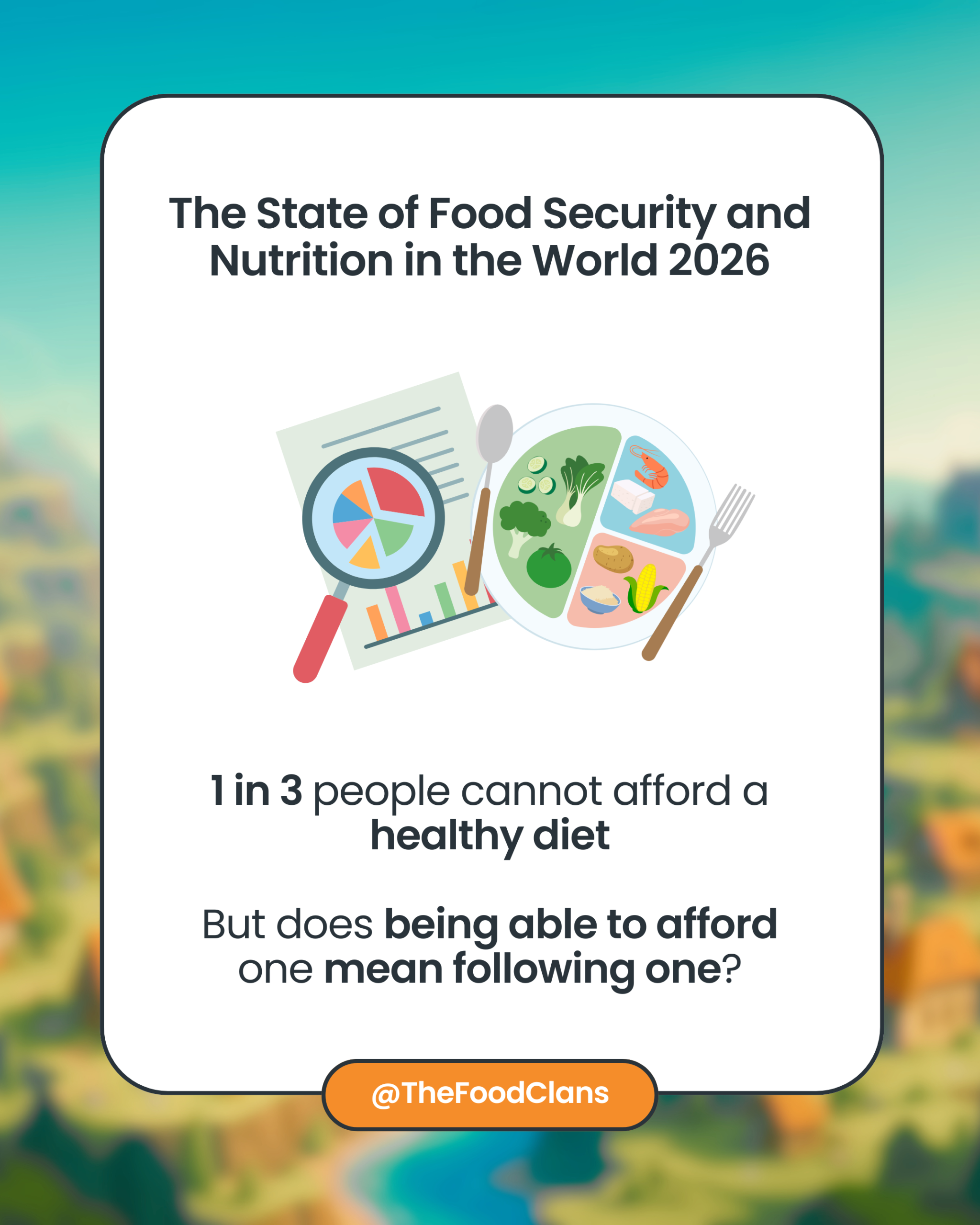
This year’s SOFI focuses particularly on the high cost of a healthy diet. Here too, there has been some improvement: the proportion of people unable to afford a healthy diet has fallen from 37.4% in 2021 to 32.7% in 2025. But 32.7% still means around 2.69 billion people, almost 1 in 3 people worldwide.
What is a healthy diet? In 2024, FAO and WHO identified four universal principles: it should be adequate, balanced, diverse and moderate, which means providing the nutrients we need, maintaining energy balance, including a variety of foods, and limiting dietary components that can be harmful when consumed in excess.
But there is one point in the report that I find particularly important: reducing the cost of a healthy diet is necessary, but it does not automatically mean that people will eat more healthily.
Just because more people can afford a healthy diet does not necessarily mean they are following one. Even when healthy foods are affordable, our choices are influenced by many other factors: availability, our preferences and habits, the information we receive, the food environment around us, the time and resources we have to cook, and our food knowledge and cooking skills.*
This is precisely where The Food Clans began. The project came from asking myself how food knowledge could be made more accessible to children and families: helping them get to know foods better, understand and value dietary diversity, discover different ways of using ingredients, and have more tools to feel confident in the kitchen and make their own informed food choices.

Of course, education cannot make foods affordable for a family when those foods are economically out of reach. But making a healthy diet affordable is only part of the journey. We also need the knowledge and practical tools to put it into practice.
And that is where I hope The Food Clans can make at least a small contribution.
*SOFI itself notes that factors such as consumer preferences, education and food-environment interventions fall outside the scope of this report and will be addressed in a forthcoming FAO report on healthy diets.
📄 Here you can read the full SOFI 2026 report and the In Brief version.